Chapter 12 of 12
Epilogue
Biggin Hill, 1979 onwards
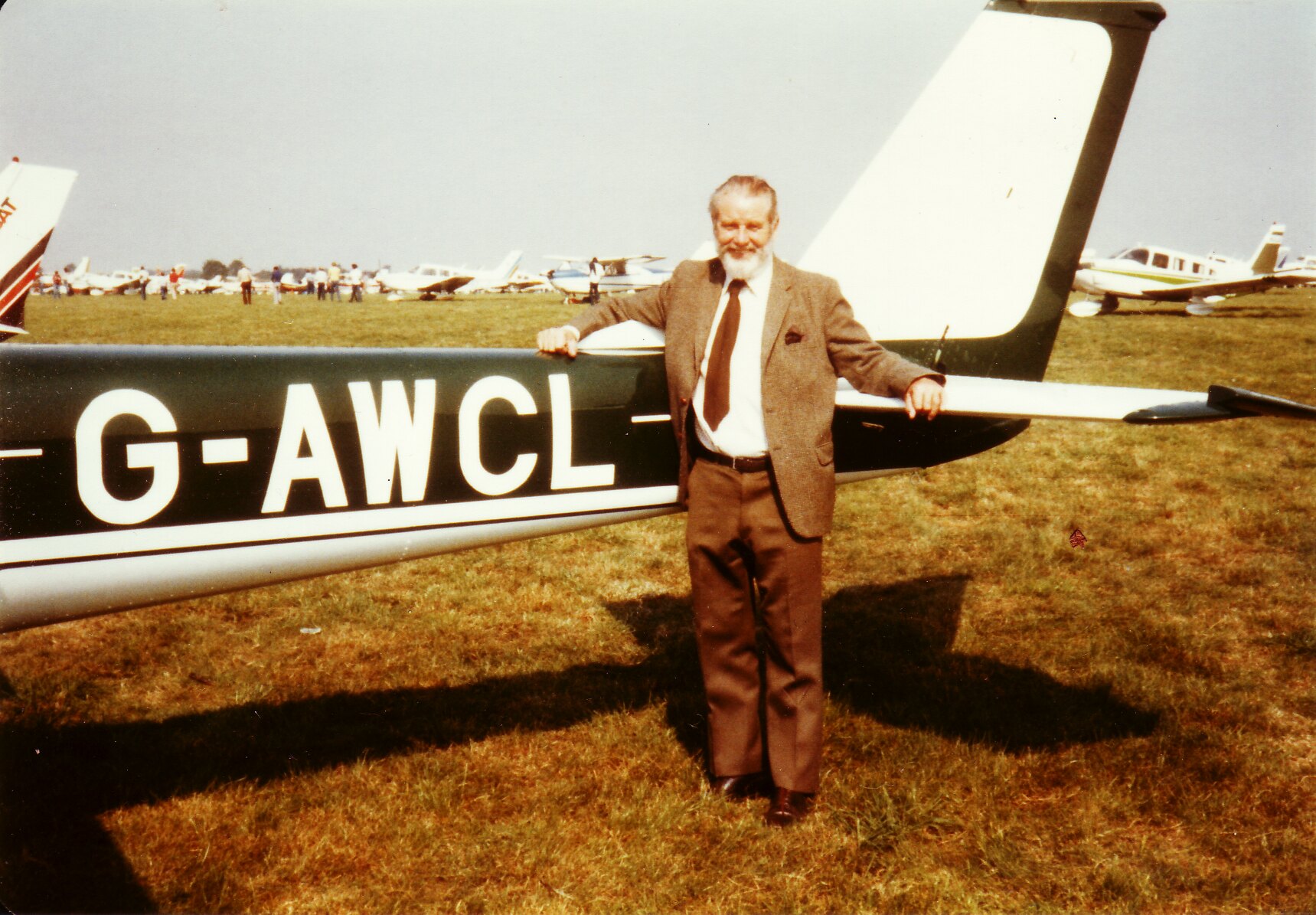
I flew G-AWCL to Cranfield to attend an air show. I was helping on one of the stands and my cargo was a bucket, broom and dusters. Not many cleaners go to work in their own aircraft!
Cranfield was as I had known it. The building in which the pilots and navigators had met to crew up was still there as was the Sergeants’ Mess in which I had lived.
Soon after I retired in 1979 I joined a flying club at Biggin Hill. In August 1980 I obtained my Private Pilot’s licence and acquired a Night Rating and Instrument Meteorological Conditions Rating. I made my first night solo on 30 October.
I bought a Cessna 150, had it repainted green and white and installed a new engine. It was wonderful flying at night in my own aircraft, and each time I lifted G-AWCL off the runway it was as though only a few weeks had passed since I first experienced the thrill of night flying.
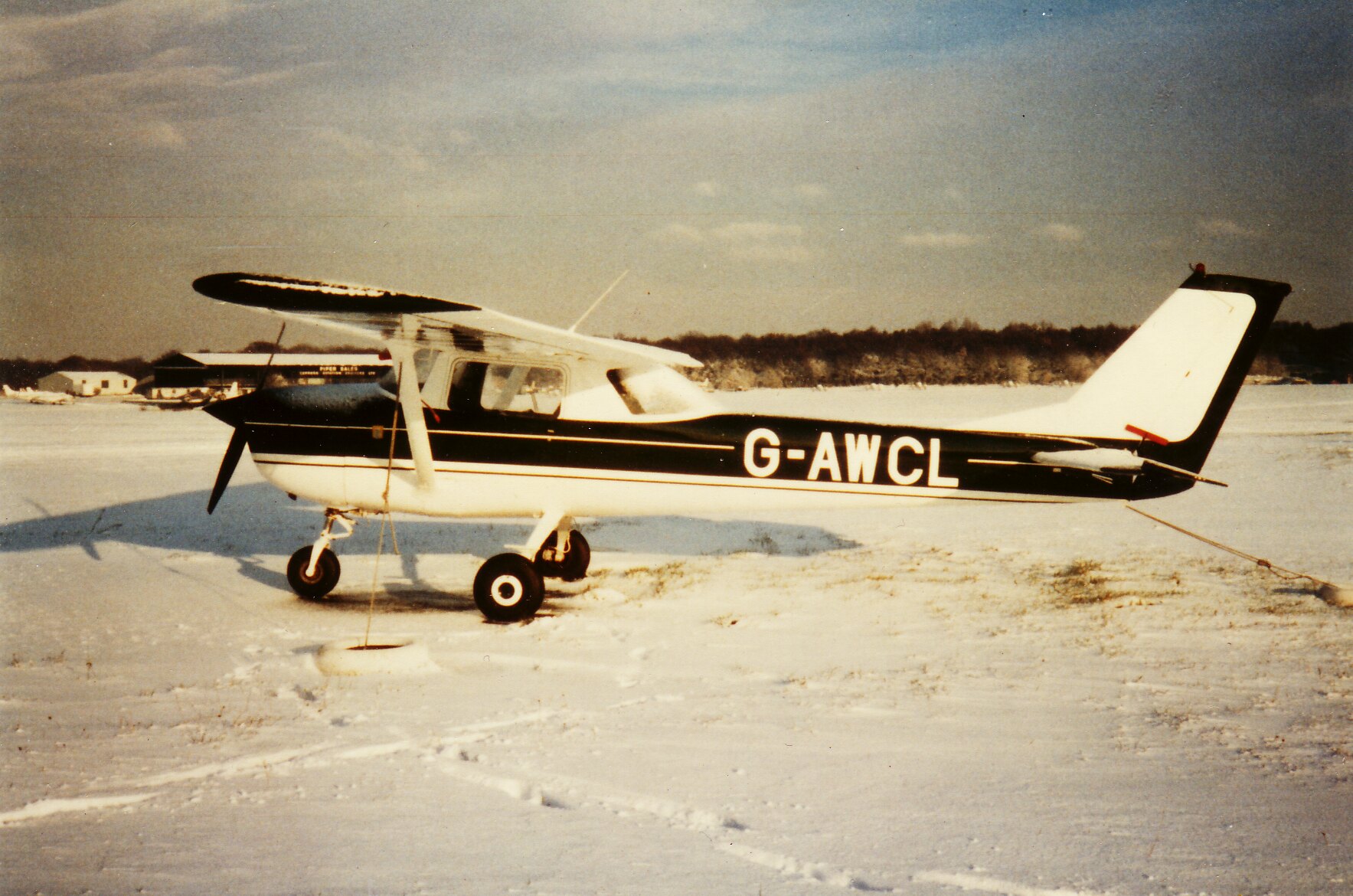
G-AWCL survived these wintry conditions, which were about as bad as those at Prestwick in 1942. Times had changed though: I was not asked to shovel snow off the Biggin Hill runway!
Forty years on, aircraft with me in them still went wrong. I took off at night in one of the Club’s aircraft and just as I became airborne the instrument lighting failed. Landing was an interesting experience.
I was to fly with a friend, accompanied by his wife on a trip to Cranfield in his twin-engined aircraft. On the point of getting airborne the starboard engine failed. Luckily we were using Biggin Hill’s long runway so the take-off was safely aborted. My friend’s wife and I were then transferred to another aircraft. The pilot started his take-off run and the port engine caught fire! The third attempt to make the journey was successful: we went in an old, but reliable single-engined machine. I accepted such vicissitudes as a normal part of flying, but I sympathised with the lady for she must have felt as I did on my first flight when the Anson started to fall apart!
The fun and the frustration of learning to fly are summed up by an incident that took place after my first solo. I was having great difficulty making other than bad landings so I went up with the Club’s Chief Flying Instructor who had decided that I needed his personal attention to get things right. After the final landing I said rather diffidently, “Are my landings still bloody awful?” In a resigned voice he replied, “No, just awful”.
Editor’s notes
These notes were added in 2026 and are not part of E G White’s text. They summarise information from the Wikipedia articles linked at the end of each note. See About this edition and the glossary of RAF terms.
Biggin Hill, one of the principal fighter stations defending London in the Battle of Britain, ceased to be an operational RAF station in 1958. Civilian light aviation had begun moving there from Croydon in 1956, and when Croydon closed in 1959 Biggin Hill became a mainly civilian airfield; it is now London Biggin Hill Airport. The Cessna 150, the two-seat trainer he bought, is the fifth most-produced aircraft ever, with 23,839 built before it was succeeded by the Cessna 152 in 1977.
Source: London Biggin Hill Airport, Cessna 150 (Wikipedia).
Aircraft in this chapter
_at_Wagga_Wagga_Airport.jpg)
Cessna 150
G-AWCL
- An American two-seat, tricycle-undercarriage light aircraft designed by Cessna for flight training, touring and personal use.
- The prototype first flew on 12 September 1957 and production began at Wichita, Kansas, in September 1958; a further 1,764 were built under licence by Reims Aviation in France.
- With 23,839 built it is the fifth most-produced aircraft ever. It was succeeded in 1977 by the Cessna 152.
- Versions included the basic Standard, the dual-control Trainer, the Commuter and the aerobatic Aerobat. E G White bought one, G-AWCL, after gaining his private pilot’s licence in 1980.
Source: Cessna 150 (Wikipedia).